
Kyoto Research Park
- TOP
- KANSAI Startup Ecosystem
- Kyoto Research Park
Kyoto Research Park (KRP), Shimogyo-ku, Kyoto
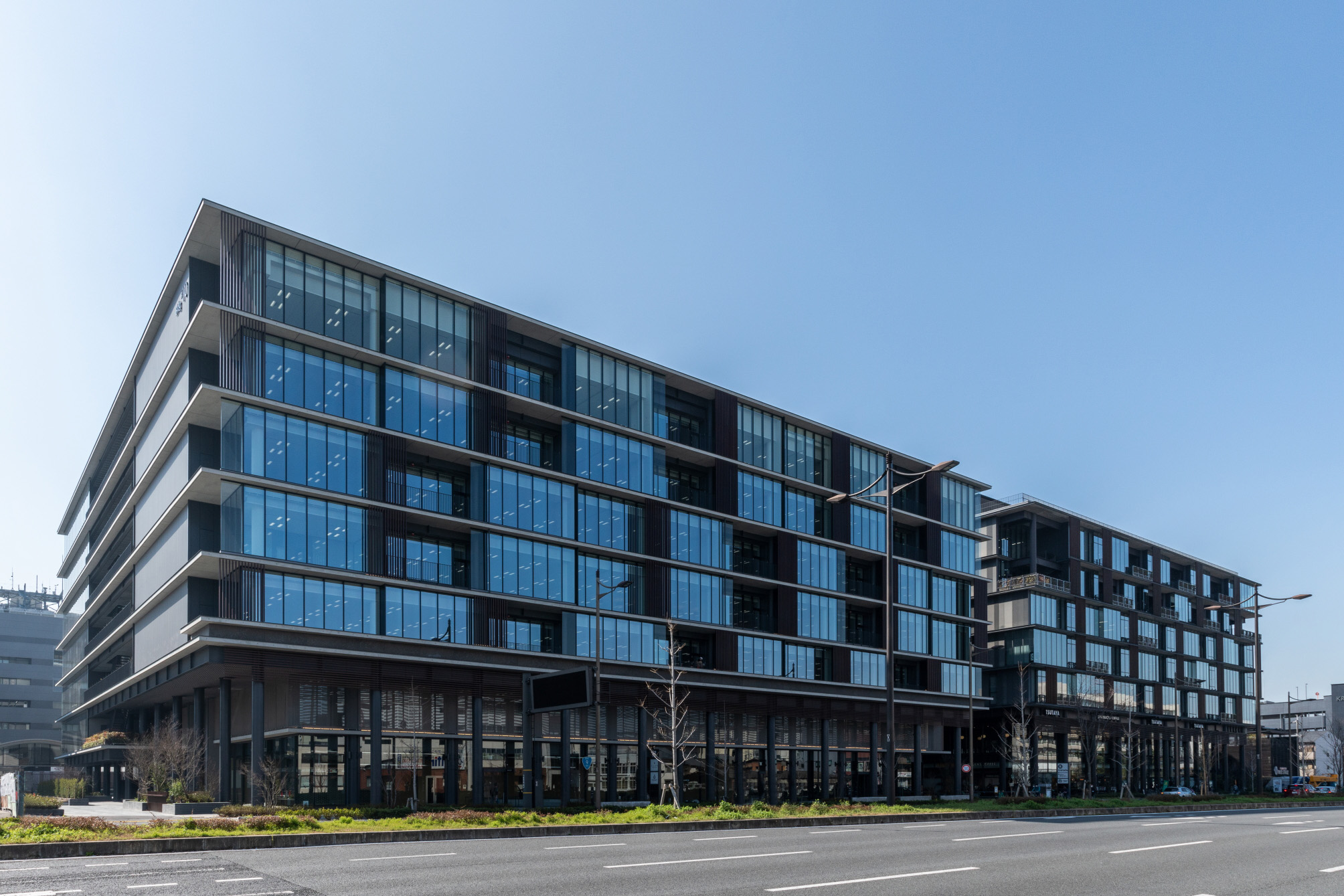 Established in 1989 as Japan's first privately operated urban research park, utilizing the former site of the Kyoto factory of Osaka Gas Co., Ltd. Located on a 59,000-square-meter site, it serves as a major business hub with 18 buildings.
Currently, it is home to 510 companies and organizations, employing approximately 6,000 people. KRP actively hosts events aimed at fostering innovation, with 266 events held in the fiscal year 2024, attracting a total of 14,460 participants. The site also features cafes, restaurants, bookstores, and other retail spaces, contributing to community-building activities in collaboration with local businesses.
Creating New Businesses and Industries Originating in Kyoto through an Innovation Ecosystem
KRP is an industrial cluster facility operated by the Osaka Gas Group. Its mission is to create an innovative ecosystem by facilitating interaction among researchers, entrepreneurs, new business developers, and students from around the world, aiming to generate new businesses and industries originating in Kyoto.
70% of Rental Labs in Kyoto are Concentrated at KRP
To support the growth of startups—the primary drivers of innovation—KRP provides a variety of initiatives, including flexible office space. From shared offices like "KRP BIZ NEXT" for solo entrepreneurs to larger spaces exceeding 3,000 square meters, more than 340 units are available, accommodate businesses of various sizes and staffing needs.
KRP also offers extensive rental laboratories, with 120 units ranging from about 30 to over 1,000 square meters each, supporting advanced research in fields like biotech, electronics, and chemicals. While most research facilities in Japan are located outside city centers, urban labs are in high demand. According to KRP, 70% of Kyoto’s rental laboratories are concentrated within the park.
Fostering Networking Among Resident Companies and Researchers
KRP is committed to fostering networking among resident companies and researchers to create new opportunities for joint research and business partnerships. This spring, a community manager was assigned to the "TAMARI-BA" event space within KRP, serving as a bridge between various companies and departments. By engaging with residents through daily interactions, the manager gathers insights into their needs and concerns. This initiative, in collaboration with social startups, aims to break down barriers and encourage cross-disciplinary collaboration.
All-English Programs Connecting Startups with Global Corporations and VCs
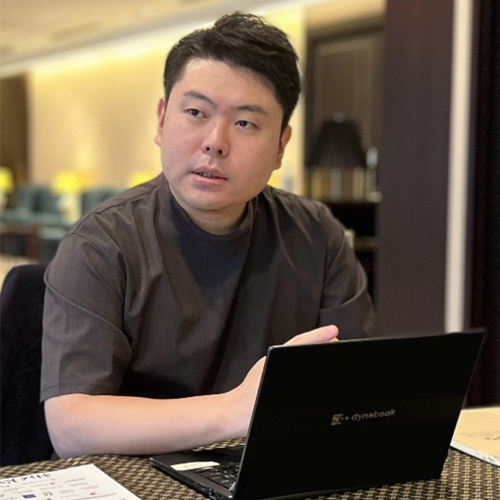
HVC KYOTO is an innovation platform that connects startups in the medical and healthcare sectors with major companies and venture capitalists (VCs), with a strong emphasis on global expansion. "Not only are the demo day presentations held in English, but all discussions with advisors are conducted in English as well," says Kazuyoshi Nagata, Innovation Design Department. Now in its tenth year, HVC KYOTO has supported 194 startups since its inception, helping them raise 76.5 billion yen as of March 2025. Its robust funding and matching opportunities, as well as its international partnerships, have earned HVC KYOTO the Minister of Economy, Trade and Industry Award at the Japan Open Innovation Prize in February 2025.
Building Networks with Overseas Science Parks
KRP is also actively building networks with overseas science parks to promote international exchange, support global expansion, and facilitate mutual use of facilities. In July, KRP signed a cooperation agreement with Malaga Tech Park, the largest science park in Spain, bringing its global network to seven sites in six countries. While most of the world’s approximately 1,000 science parks are operated by governments or universities, KRP’s private-sector model is rare and highly regarded by the International Association of Science Parks.
Attracting Leading Overseas VCs and Promoting All-Kyoto Matching
A key focus for KRP moving forward is strengthening support for entrepreneurs participating in HVC KYOTO. Working in collaboration with JETRO, Kyoto Prefecture, and Kyoto City, KRP aims to leverage its international network to attract leading overseas VCs and drive startup matching under an "All-Kyoto" initiative. In 2027, KRP will further expand its support by opening a new 2,700-square-meter rental laboratory facility.
Case Study: MaRI Co., Ltd. Accelerating U.S. Market Entry through HVC KYOTO
Non-Contact SAS Diagnostic and Treatment Devices with Global Potential
MaRI Co., Ltd.
Sleep apnea syndrome (SAS) is increasingly recognized as a public safety concern, as individuals with the condition may unknowingly drive while impaired alertness , potentially leading to serious accidents. With estimated 20-30% of seniors affected by SAS, the need of effective treatment is urgent. MaRI has developed a non-contact device for the diagnosis and treatment of SAS, significantly reducing the burden on patients. By establishing its headquarters at KRP, MaRI has leveraged the park’s advantages to build a robust development system.
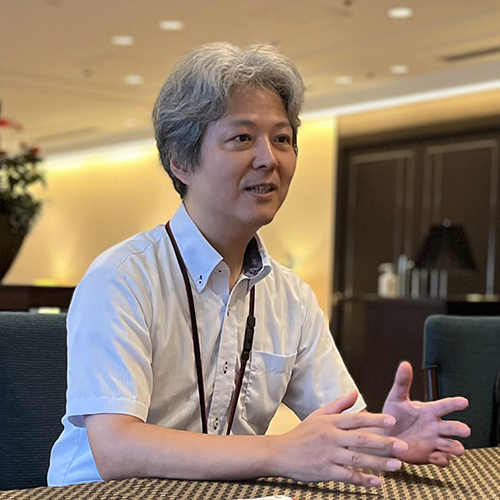
Hirofumi Taki, CEO of MaRI Co., Ltd.
Born in Osaka in 1975, Taki graduated from Kyoto University’s Faculty of Medicine and founded MaRI in November 2017.
SAS: A Disease with No Subjective Symptoms
Taki became interested in SAS eight years ago while studying at Stanford University, aiming to start a business. Observing a conversation at a sleep clinic, he was struck by the fact that SAS patients often experience no subjective symptoms—unlike most other diseases. At the time, awareness of SAS in Japan was low, and the lack of self-awareness among patients was surprising.
The standard treatment, continuous positive airway pressure (CPAP), is effective but burdensome, with one-third of patients discontinuing its use within a year. MaRI’s goal is to provide an alternative, less invasive treatment option with its non-contact device.
Strategic Location for Collaboration with Kyoto University
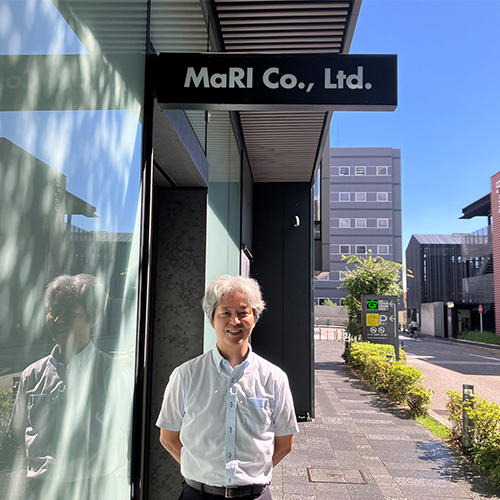
Developing the device requires collaboration between Kyoto University’s medical and engineering faculties. KRP, located midway between the two and near Kyoto Station, was the ideal base. As MaRI expanded, it relocated to larger offices within KRP and now occupies two spaces designated for office and laboratory use. The proximity of these facilities has accelerated research efforts and improved employee recruitment, with the company now employing 13 people.
Three Mile Island Accident: Catalyst for SAS Treatment in the U.S.
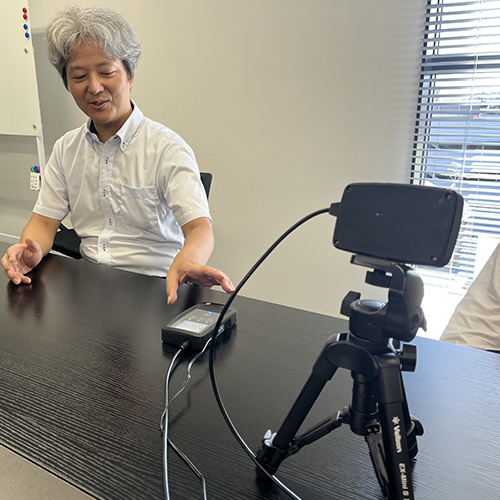
The U.S. leads in SAS treatment, driven in part by the 1979 Three Mile Island nuclear accident, where an SAS-afflicted operator lost consciousness, contributing to the disaster. As a result, U.S. insurers impose a 50% premium increase on patients with untreated SAS. In the United States, treatments include not only CPAP but also implanting pressure sensors that stimulate the tongue via electric currents during apnea episodes—an invasive option that places a significant burden on patients. There is considerable unmet demand for less invasive, non-contact solutions like MaRI’s, which uses millimeter-wave radar to monitor chest movement and detect apnea and low-frequency sound to gently stimulate normal breathing without waking the user.
HVC KYOTO Boosts Visibility and Matching with Global VCs
Participation in HVC KYOTO was pivotal step for MaRI’s U.S.-focused business strategy. Pitching in English at demo days increased the company’s visibility among overseas VCs interested in healthcare startups, facilitating key fundraising matches.
Combining AI Algorithms to Address Pre-Symptomatic Disease
SAS has been slow to gain traction in Japan due to its lack of symptoms, but when left untreated, it increases the risk of lifestyle diseases—a growing concern as Japan’s population ages. Demand for non-contact devices with minimal patient burden is expected to rise.
Leveraging its partnership with Kyoto University, MaRI has developed high-precision millimeter-wave radar. Combined with AI algorithms, this technology can help predict the onset of diseases at pre-symptomatic stages. MaRI is also conducting joint research with various medical departments and plans to develop devices beyond non-contact types. To prepare for global expansion, the company is actively collecting data from non-Japanese subjects. Resident networking and the international ecosystem at KRP are crucial elements in MaRI’s growth strategy.